Black Panther: Wakanda Forever Movie Review

For my brother’s birthday, he decided he wanted to watch the new movie Black Panther: Wakanda Forever. I went straight into this, having no idea what was going to happen, only knowing that it was a dedication to the actor, Chadwick Boseman. The movie had its fun parts but overall, it was extremely emotional. 

Right off the bat, we see Shuri and her mother, Queen Ramonda who are mourning the loss of the brother and son, T’Challa, the Black Panther. In mourning, they both take a mother and daughter trip as a new character is introduced, Namor. He is a merman that can fly and is the leader of a Meso-American tribe. They possess a great deal of vibranium which the rest of the world wants. Namor hopes to get help from Wakanda to protect his people and to go to war with the rest of the world. If they refuse, he won’t hesitate to also take down both the world and Wakanda.

This movie was a rollercoaster. At times, there would be some really nice, fun moments. However, more than half of the movie was very sad and grim. Shuri has a hard time grieving and accepting the loss of her brother. She shows great character development as she learns to live with the loss of family members while also deciding on her morals. The cause of her growth is Namor. While being Shuri’s villain, he has good intentions. Marvel has always been good at making great villains. I found Namor to be a good person and good leader, but the execution of his plans made it difficult to side with him. While I empathize with Shuri, I could also do the same with Namor. The personality of these characters and who they are really presented well. 

The plot of the movie overall was very well paced and pretty easy to understand. Everything is pretty clear and is explained. The visuals were very impressive and pleasing to look at. As per usual, Marvel is amazing with their aesthetics and storyline. Something I did find interesting though, was how fast it went by, at least for me. There were some portions I wish I got to see a bit more of and some characters I wish had more screen time. I wanted to see a bit more growth in character relationships whether it was with another character or places a character was at. It would have been cool to see a bit more of how Namor’s underwater kingdom works and I really wanted to see more of Shuri and a new character work together while creating a deeper relationship. 

While I long for some more details and more time with certain characters, the story was still great and had me even tear up. I can’t help but wonder what will come next for Shuri and I especially can’t wait for whatever Marvel has in store. Black Panther: Wakanda Forever was a really good, sad movie that I would definitely recommend.

-Nicole R.

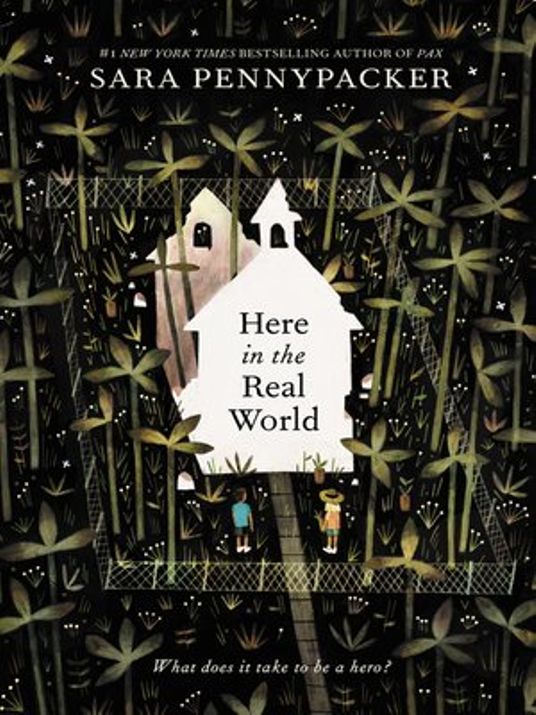
Here in the Real World

Here In The Real World, by Sara Pennypacker, is a story about a young boy named Ware, who just can’t seem to fit into others’ expectations of him. He doesn’t want to, either. He prefers to stay just outside of crowds, like an onlooker instead of a participant. The people around him don’t really seem to accept him for who he is. Even his parents, as later revealed, wish he could just be “normal,” like all the other kids. 

His parents send him off to a summer camp, an idea he voices his disdain for. He even offers to PAY his mother not to make him go. This statement is what leads to the parents’ aforementioned wish.

His parents do not oblige, obviously, and off to summer camp he goes. Unfortunately for him, things haven’t changed from the last time he was there. The room still smells. The kids are still mean. And they all still have to do laps around the entire building in the blistering hot Florida sun.

It’s during these laps that the main plot of the book begins. 

Ware decides to make a run for the large, old tree behind the building. And he makes it. No one sees him run away. No one sees him climb the tree. And no one sees the old abandoned church behind the wall. Not the way he sees it, anyway. 

He sees a great castle, with a drawbridge and a solar calendar. He sees what he’s always wanted. A place to be alone. To be by himself. That is, until he meets Jolene, the girl who has already “claimed” the lot. She uses it to grow her own vegetable garden. 

Can they learn to get along, and share the space over the summer? Or will it all fall to pieces?

You’ll have to read the book to find out. 

Here in the Real World by Sara Pennypacker is available to download for free from Libby.

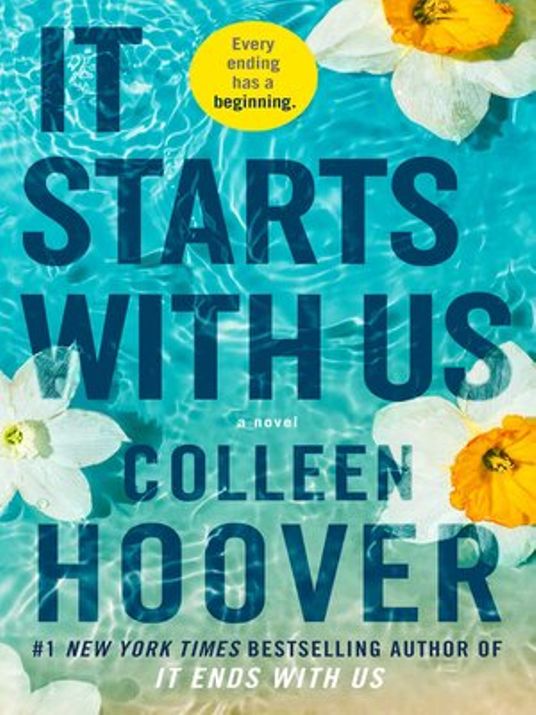
It Starts With Us by Colleen Hoover

*the review may contain spoilers

I’m well aware that this is possibly the most basic book I could’ve read but I just had to know what the hype was about. So if you didn’t know, this book is a sequel to Hoover’s It Ends With Us.

If I had to be quite frank, it wasn’t my favorite book because it was just so cheesy. It follows the story of Lily Bloom after her divorce with ex-husband Ryle. The readers see her struggle with motherhood as well as trying to distinguish herself in the love department.

The highly anticipated reveal on Lily and Atlas’ relationship was revealed in this sequel but not in the way I wanted it to play it. Compared to the first book Lily and Atlas’ relationship was sort of unrealistic and all over this place, it didn’t seem to match up to how I envisioned the characters previously. I also though the inclusion of Atlas’ stepbrother was unnecessary although it was heart warming it was a plot that I wasn’t interested in.

Colleen hoover is known for all of her books which I would say are good for first time readers trying to get into romance. However, in my opinion the storylines are overplayed and unrealistic that it’s hard to immerse yourself truly within the book.

I would say if you want to get into romance books I personally would stay away from this book. However, if you just want to get into reading I would recommend this book because it is a pretty fast and easy read to get into.

-Madison C.

It Starts with Us by Colleen Hoover is available to check out from the Mission Viejo Library. It is also available to download for free from Libby.

Album Review: The Stone Roses’ Self-Titled Album

Many people today are familiar with the Smiths, one of the most acclaimed and unique bands of their time. They foreshadowed the Britpop bands of the 90s like Blur, Oasis, Pulp, and Suede, just to name a few. What many today are unaware of is the Madchester movement that happened between these two events. The largest band from this movement was the Stone Roses whose self-titled album is a masterwork of the genre.

The album cover of The Stone Roses

The Stone Roses is a psychedelic, rocking, yet danceable piece of music. There are trippy effects and fast tempos in this album. My favorite songs from the band’s debut album are easily “I Wanna Be Adored” and “She Bangs the Drums”.

“I Wanna Be Adored” starts off with a trippy sound collage which leads into Mani’s bass part. The song itself is very simple with the lyrics just being “I don’t need to sell my soul/He’s already in me/I wanna be adored” repeated throughout the song. “She Bangs the Drum” starts off with a danceable drum and bass part which serves its purpose well. The guitar and vocals are incredible too with Ian Brown’s fusion of Morrisey and Robert Smith’s vocal styles.

I put off listening to this album for quite some time but I’m glad I was able to listen to it. It has to be one of the best (and most influential) albums of the 80s. I give it a 9.25/10 with my only complaint being that the intros and outros can be a tad bit too long. Give it a go; it will surprise you!

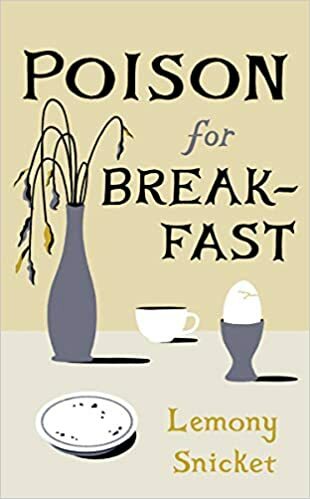
Book Review: Poison for Breakfast by Lemony Snicket

When I first picked up Poison for Breakfast and saw it was written by Lemony Snicket, I felt inclined to read it just out of how much I enjoyed his books when I was younger, especially the Series of Unfortunate Events and All the Wrong Questions series of books.

However now that I am older, I was unsure if what I had come to expect from Snicket would be as enjoyable or memorable now that I have more experience reading and different tastes. To my pleasant surprise, this is the most mature and unique Lemony Snicket book I’ve read, even if it’s title and premise seems just as bizarre and out of place as something you would see in any other one of his works.

The entire book revolves a man and his reaction when he is eating his regular breakfast and finds a note saying, “you had poison for breakfast”. This sends the man into a sort of introspective spiral, as he spends the day trying to figure out who did it, while also reflecting on his philosophy towards life and the creative process. The book is a whole is very short at around 150 pages, and all of those pages are dedicated to the man and his reaction to what he believes will be his final day alive. While the book has a style very characteristic of Snicket, I think that most of the things he writes about in this are more observational instead of focused on a singular plot line or a classic story structure. Snicket even says on the description on the back of the book that some may call this a “book of philosophy”, which I think is a pretty appropriate term for the work.

Overall, I enjoyed the read, and thought it was definitely worth my time. One thing I would say to anyone wanting to read this is that it can be a bit hard to follow Snicket’s train of thought throughout the book, as his writing is full of phrases or references that have deeper meanings when looked into. Because of this I think this could a book that could be better if I decide to read it again, because I feel like I would pick up on a lot more of the messages Snicket conveys throughout the text. I would recommend this book to anyone interested in books with more philosophical elements, as well as anyone who is familiar with Snicket from his older work as well.

Poison for Breakfast by Lemony Snicket is available to check out from the Mission Viejo Library.

A Place at the Table by Saadia Faruqi and Laura Shovan

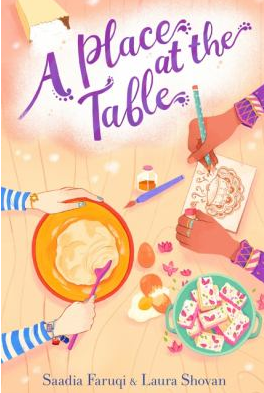
This book made me hungry. It also made me feel warm and fuzzy inside. When I first saw the cover I thought it was about cats because the illustrations around the title look like cat paws to me, but I picked it up anyways. It was actually about food, and good food at that.

This book centers around two girls, Sara and Elizabeth. Sara´s mother runs an after school South Asian cuisine class (club) and there she ends up partnered with Elizabeth. 

Sara is a beautiful young girl at Poplar Springs Middle school. She just transferred there from her Islamic school called Iqra Academy where her best friend, Rabia, goes. She doesn’t really love cooking, but since that’s her mom’s job… 

Elizabeth loves cooking! She also goes to Poplar Springs Middle and she attends Sara´s mother´s after school club. Her best friend, Mandy, also goes to the after school class but she isn’t always the best friend. Mandy starts hanging out more with another girl and Elizabeth ends up partnered with Sara.

This book is a really, really, good book about 2 chefs/bakers. I also really liked the side plot about their immigrant mothers getting their citizenship. I thought it was really interesting because I still remember my dad getting his citizenship at the same time as my friend’s dad so we hung out the whole time. So it was really fun to see what they, as older kids, and not 2nd graders, think about this.

Overall, this is a great book that you can only read with food on hand because the amount of mouth wandering food in this book is extreme. It was interesting to read because the narrator rotated every chapter so you got to see each point of view. It was really a very good book.

A Place at the Table by Saadia Faruqi and Laura Shovan is available to check out from the Mission Viejo Library.

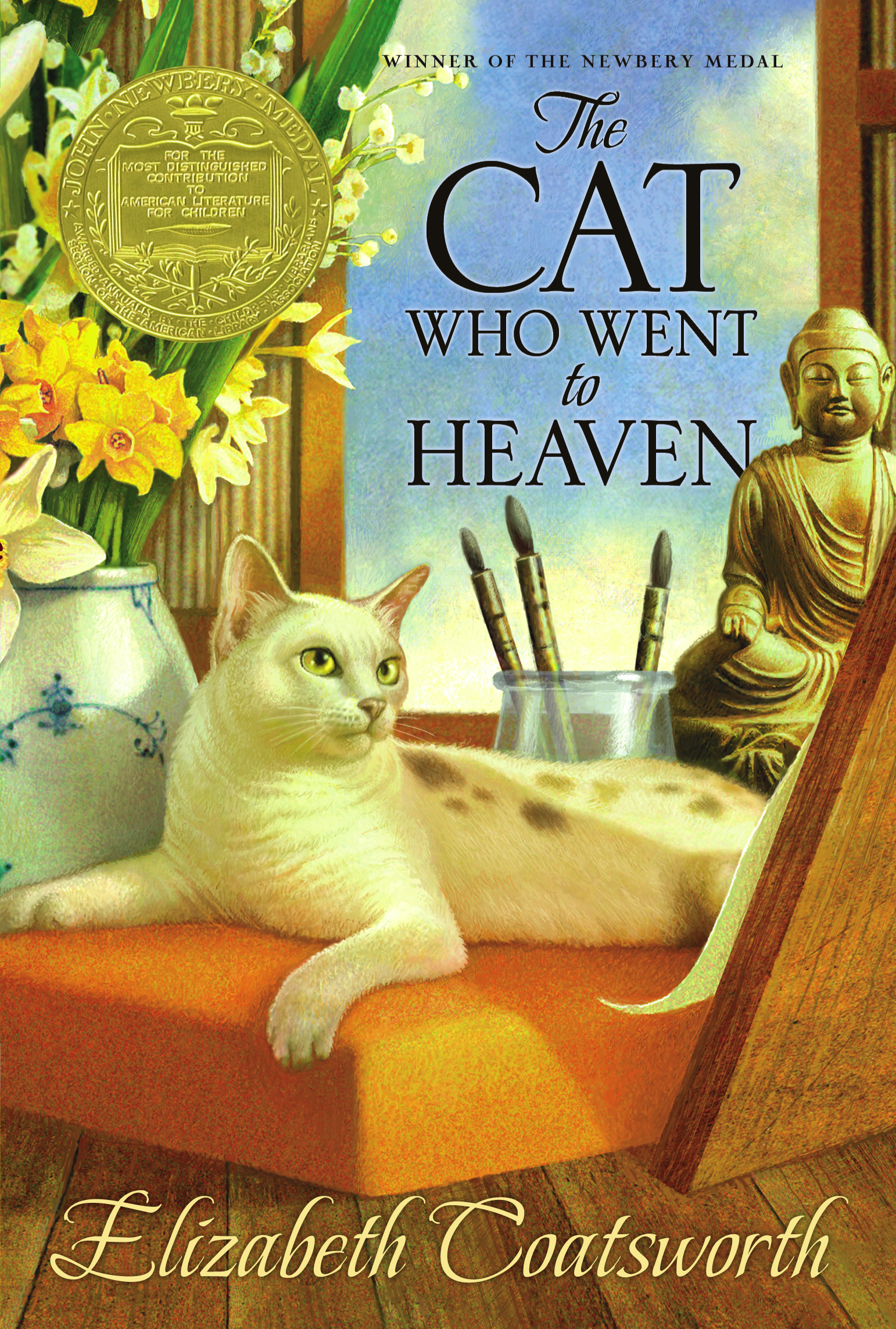
The Cat Who Went to Heaven by Elizabeth Coatsworth

The Cat Who Went to Heaven is a Newbery Award-winning book by Elizabeth Coatsworth. The story is about a poor young Japanese artist. The artist sends out his housekeeper with some money to buy him food. When she returns with a cat instead of food, the artist is astonished and furious. However, he realizes that the cat is three-colored, which is considered good luck in Japan. The artist decides to keep the cat, and he names it “Good Fortune.” He soon becomes very fond of his new cat.

One day, the head priest of a nearby Buddhist temple pays an unexpected visit to the artist. The priests of the temple would like the artist to create a painting depicting Buddha’s death. They promise a large sum of money to the artist if his painting is successful. The artist is overjoyed by the offer, and he gets to work on the painting.

As the painting develops, the artist depicts various animals surrounding Buddha. The artist’s cat, Good Fortune, occasionally enters the room to watch the artist work. As the painting nears completion, it becomes apparent to the artist that Good Fortune would like a cat to be depicted in the painting. The artist hesitates to include a cat in the painting because it might anger the priests. He must decide whether to please Good Fortune at the risk of losing his commission for the painting.

I found this story to be charming and engaging, and it was fascinating to learn about the Buddhist religion and ancient Japanese folklore. The story is quite short, and I was surprised that such a small book would be considered for the Newberry Award. However, after reading this book I believe the award is well-deserved. I would recommend this book to beginning and advanced readers alike.

The Cat Who Went to Heaven by Elizabeth Coatsworth is available to check out from the Mission Viejo Library.

Murder in Retrospect by Agatha Christie

Murder in Retrospect, published as Five Little Pigs in the United Kingdom, is a mystery novel by Agatha Christie.  This book features Hercule Poirot, the celebrated detective.  Poirot is visited by a young woman named Carla Lemarchant.  Carla asks Poirot to investigate the murder of her father, which was committed sixteen years earlier.  Carla’s father, Amyas Crale, had been killed by poison.  His wife, Caroline Crale, was tried and convicted of the murder.  However, Carla is convinced that her mother is innocent.  Poirot is intrigued by this curious case, and he agrees to investigate.

On the day of the murder, five other people had been in contact with Amyas Crale.  Poirot compares these five suspects to the “five little pigs” of the nursery rhyme, because each has a unique background and personality.  He interviews each suspect, but finds no obvious culprit.  Solving a murder that occurred sixteen years ago is no easy task, but Poirot is up to the challenge.

As I read this novel, I was very puzzled about who could have committed the murder.  The ending was quite surprising.  As usual, Poirot discovers an ingenious way to solve the case.  This book is unusual for a murder mystery, because the murder took place many years before, and the main suspect was already convicted.  This made for an interesting story.  The characters are compelling and the story flows well.  I found this book extremely entertaining, and I consider it one of Agatha Christie’s best novels.  I would highly recommend it.

Murder in Retrospect  by Agatha Christie is available to check out from the Mission Viejo Library.

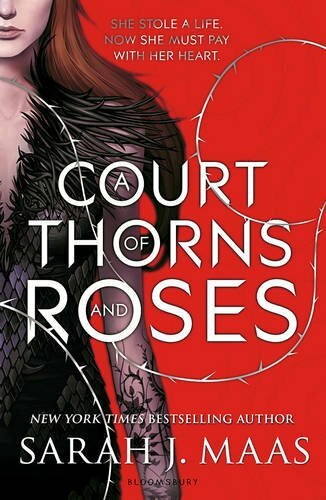
A Court of Thorns and Roses (Some Spoilers Ahead!)

“A Court of Thorns and Roses”, is a captivating book about a nineteen year old girl, named Feyre. Feyre and her family are going through tough times, and food is hard to come by. They are on the verge of hunger and are rejected by upper class society. Feyre has taken it upon herself and is now responsible for doing the hunting to provide food for her family. One day she spots a doe to hunt, but to her astonishment, the doe is attacked by a huge wolf first. She wonders if he’s a Fae in wolf form, but she shoots him with an ash arrow nevertheless because she despises Fae. Soon, a large wolf faerie comes and demands retribution for the murdered wolf. Feyre agrees to pay with her life and live forever in Prythian, a land full of dangerous creatures.

I really loved this book! This book reminds me of “Beauty and the Beast”, but with a nice twist to it! Moreover, I love how this book is a pretty straightforward love-story. Most books I read, it’s almost always about a girl, and there are many guys she could possibly fall in love with. But not in this book! That’s why I enjoy reading it so much. The mystery in this book is also amazing! Since the beginning of the book, everyone starts talking about a mysterious “she”. At a certain point in the story, Feyre was swimming with Tamlin when she asked him who took Lucien’s eye? Tamlin hesitantly responds and says “she” took it out. There was another time when a fairy whose wings were ripped off screams in pain while saying, “she” took them off. Like, who is this mysterious “she” everyone is talking about? You’re just gonna have to keep reading to find out! Lastly, I love how there aren’t many plot twists in this story. At the beginning of the story, there are many questions you are going to keep asking yourself, and as you read on, you can start making guesses on who, or what is going to happen next.

Out of 5 stars, I would give this book a 4.8. I would highly recommend this book for ages 13 +, since there are some adult content in there that might not be appropriate for younger children.

A Court of Thorns and Roses by Sarah J. Maas is available to check out from the Mission Viejo Library. It is also available to download for free from Libby.

How to Write a Novel in four Months: Advice from a Teen Author

Writing a novel takes a lot of time; If you’re reading this, you may want to know how to write a book in four months. Well, I’m here to tell you that it is possible. I wrote my first novel in four months when I was thirteen. And, while it wasn’t the best novel ever written, it was a start. Here’s the thing: many people think that writing a book is a huge, daunting task that takes years. And, sure, some novels do take years to write. But, those novels usually result from years of planning, outlines, and drafts. You can do it if you want to write a novel in four months. All you need is a plan and a little bit of motivation. How do you write a book in two to four months? First, you need to sit down and make a plan. What is your novel about? The main plot? The subplots? Who are the main characters? What are their motivations? Once you have a plan, it’s time to start writing.

The first step is to set a goal for yourself. Write 200-500 words a day, or 1,000 words a day, or whatever you think you can handle. And then just write. Write without stopping, without editing, and without worrying about whether or not your writing is good. Just write. The first draft is always the hardest, but it’ll be more manageable once you get going. If you hit a wall, take a break. Go for a walk, watch a movie, or read a book. But don’t give up. Writing a novel is a lot of work, but it’s also a lot of fun. And, in the end, it’s always worth it.

Second, get started and keep going. You don’t need to have everything figured out before you start writing. In fact, it’s often better to start writing and see where the story takes you. You can always go back and make changes later. The most important thing is to keep writing. Keep going even if you hit a rough patch or think your writing could improve. Just keep going. The more you write, the better you’ll get at it. And if you finish your novel and are unsatisfied with it, that’s okay. You can always revise it or even start over. The important thing is that you finish it. Writing a novel is a huge accomplishment, no matter how long it takes or how it turns out.

Third, set a daily word count goal and stick to it. Set a daily word count goal and stick to it. This may seem daunting, but it is doable if you are disciplined and have a clear plan. Sit down and calculate how many words you need to write daily to reach your goal of 50,000 words in four months. This may seem like a lot, but only about 800-1000 words per day. Once you have your daily plan, make sure to stick to it. There will be days when you may feel like you need help to get stuck, but push through and remember your goal. If you stay caught up, don’t stress; catch up as soon as possible. Writing a novel is a lot of work, but it is also fun. So, set your goal and stick to it, and you will be well on your way to writing a great novel in just four short months.

Fourth, Don’t worry about being perfect; just keep writing.
Assuming you have a story outline and characters already planned out, the best way to write a novel in four months is to just keep writing. It can be easy to get bogged down in perfectionism, but it’s important to remind yourself that the first draft doesn’t have to be perfect. Just get the story down on paper (or screen), and worry about fixing it later. If you’re worried about making mistakes, just remember that everyone makes them. Even best-selling authors had to revise their work before it was published. The most important thing is to keep writing; you’ll be surprised how quickly the words start to flow.

Fifth, Make time for your story every day.
No matter how busy you are, if you want to write a novel in four months, you must make time for your story every day. That means setting aside at least an hour each day to write, and more if you can. Even if you can only spare 30 minutes, or 20, or 10, that’s still enough to get some words down on the page. The best way to make sure you stick to your writing schedule is to set a daily goal. Decide how many words you want to write, and then make sure you write at least that many. Some days you’ll write more, and some days you’ll write less, but as long as you hit your goal most days, you’ll make good progress. If you have trouble finding time to write, try getting up an hour earlier and writing before school or work. Or write during your lunch break. Or write in the evening after you’ve finished your homework. You can also break your writing sessions into smaller chunks and write for 10 or 15 minutes throughout the day. The most important thing is to be creative about how you fit writing into your life. There needs to be one right way to do it. Just make sure you find a way to make it work.

The next step is, Let your characters lead the way.
There’s no single right way to write a novel, but some methods are more effective than others. One method that can be particularly useful is to let your characters lead the way. What does this mean, exactly? It means that you should focus on your feelings first and foremost and let their actions and decisions drive the plot. This can be a great way to ensure that your story is character-driven rather than plot-driven. One of the best ways to do this is to brainstorm your characters before you start writing the story. Write down everything you know about them, including their backstories, goals, and personality traits. The more you know about your characters, the easier it will be to let them lead the way. Another helpful tip is to start each chapter with a character’s name. This will help you track who’s doing what and make it easier for your readers to follow. Finally, feel free to let your characters make mistakes. It’s their story, after all, and their mistakes will make them more relatable and human. Consider how your decisions have led to good and bad things in your life, and use that to inform your character’s choices. Remember, there’s no single right way to write a novel. So if you find yourself struggling, take a step back and see if letting your characters lead the practice might be the best course of action.

Finally, enjoy the process, and don’t get discouraged.
One of the best pieces of advice I can offer for anyone trying to write a novel in four months is to not get discouraged. The process can be daunting, but it’s important to remember that writing is a journey, not a destination. You will make mistakes along the way, but that’s okay! The important thing is to enjoy the process and to keep writing. There will be days when you feel like you can’t do it, but you must push through. Remember why you’re doing this in the first place. Whether it’s because you want to tell a story or you’re aiming to get published, keep your goal in mind. And don’t be afraid to ask for help when you need it. Many resources are available to help you, whether online forums, beta readers, or writing groups. The most important thing is to not give up. Writing a novel is a lot of work, but it’s also a lot of fun. So go forth and write your heart out! Get started today!

Bella H.