Book Review: Poison for Breakfast by Lemony Snicket

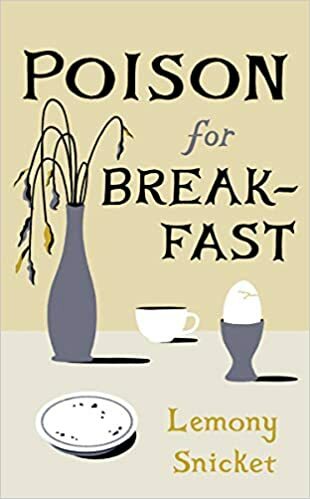
When I first picked up Poison for Breakfast and saw it was written by Lemony Snicket, I felt inclined to read it just out of how much I enjoyed his books when I was younger, especially the Series of Unfortunate Events and All the Wrong Questions series of books.

However now that I am older, I was unsure if what I had come to expect from Snicket would be as enjoyable or memorable now that I have more experience reading and different tastes. To my pleasant surprise, this is the most mature and unique Lemony Snicket book I’ve read, even if it’s title and premise seems just as bizarre and out of place as something you would see in any other one of his works.

The entire book revolves a man and his reaction when he is eating his regular breakfast and finds a note saying, “you had poison for breakfast”. This sends the man into a sort of introspective spiral, as he spends the day trying to figure out who did it, while also reflecting on his philosophy towards life and the creative process. The book is a whole is very short at around 150 pages, and all of those pages are dedicated to the man and his reaction to what he believes will be his final day alive. While the book has a style very characteristic of Snicket, I think that most of the things he writes about in this are more observational instead of focused on a singular plot line or a classic story structure. Snicket even says on the description on the back of the book that some may call this a “book of philosophy”, which I think is a pretty appropriate term for the work.

Overall, I enjoyed the read, and thought it was definitely worth my time. One thing I would say to anyone wanting to read this is that it can be a bit hard to follow Snicket’s train of thought throughout the book, as his writing is full of phrases or references that have deeper meanings when looked into. Because of this I think this could a book that could be better if I decide to read it again, because I feel like I would pick up on a lot more of the messages Snicket conveys throughout the text. I would recommend this book to anyone interested in books with more philosophical elements, as well as anyone who is familiar with Snicket from his older work as well.

Poison for Breakfast by Lemony Snicket is available to check out from the Mission Viejo Library.

A Place at the Table by Saadia Faruqi and Laura Shovan

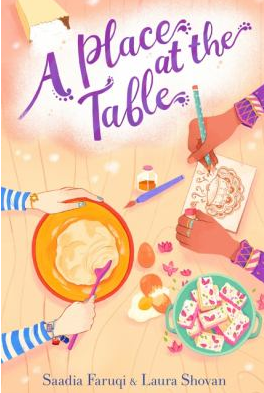
This book made me hungry. It also made me feel warm and fuzzy inside. When I first saw the cover I thought it was about cats because the illustrations around the title look like cat paws to me, but I picked it up anyways. It was actually about food, and good food at that.

This book centers around two girls, Sara and Elizabeth. Sara´s mother runs an after school South Asian cuisine class (club) and there she ends up partnered with Elizabeth. 

Sara is a beautiful young girl at Poplar Springs Middle school. She just transferred there from her Islamic school called Iqra Academy where her best friend, Rabia, goes. She doesn’t really love cooking, but since that’s her mom’s job… 

Elizabeth loves cooking! She also goes to Poplar Springs Middle and she attends Sara´s mother´s after school club. Her best friend, Mandy, also goes to the after school class but she isn’t always the best friend. Mandy starts hanging out more with another girl and Elizabeth ends up partnered with Sara.

This book is a really, really, good book about 2 chefs/bakers. I also really liked the side plot about their immigrant mothers getting their citizenship. I thought it was really interesting because I still remember my dad getting his citizenship at the same time as my friend’s dad so we hung out the whole time. So it was really fun to see what they, as older kids, and not 2nd graders, think about this.

Overall, this is a great book that you can only read with food on hand because the amount of mouth wandering food in this book is extreme. It was interesting to read because the narrator rotated every chapter so you got to see each point of view. It was really a very good book.

A Place at the Table by Saadia Faruqi and Laura Shovan is available to check out from the Mission Viejo Library.

The Cat Who Went to Heaven by Elizabeth Coatsworth

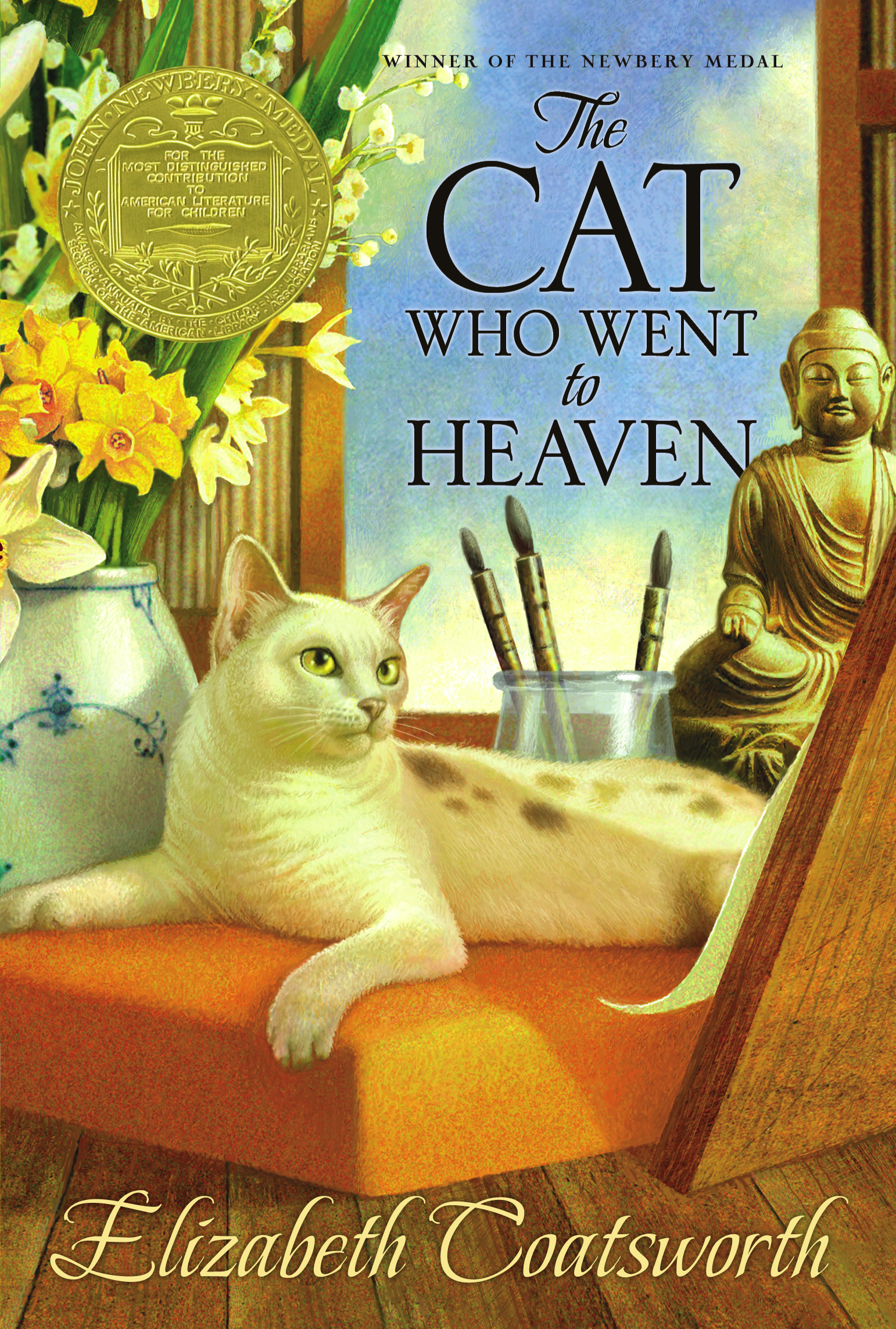
The Cat Who Went to Heaven is a Newbery Award-winning book by Elizabeth Coatsworth. The story is about a poor young Japanese artist. The artist sends out his housekeeper with some money to buy him food. When she returns with a cat instead of food, the artist is astonished and furious. However, he realizes that the cat is three-colored, which is considered good luck in Japan. The artist decides to keep the cat, and he names it “Good Fortune.” He soon becomes very fond of his new cat.

One day, the head priest of a nearby Buddhist temple pays an unexpected visit to the artist. The priests of the temple would like the artist to create a painting depicting Buddha’s death. They promise a large sum of money to the artist if his painting is successful. The artist is overjoyed by the offer, and he gets to work on the painting.

As the painting develops, the artist depicts various animals surrounding Buddha. The artist’s cat, Good Fortune, occasionally enters the room to watch the artist work. As the painting nears completion, it becomes apparent to the artist that Good Fortune would like a cat to be depicted in the painting. The artist hesitates to include a cat in the painting because it might anger the priests. He must decide whether to please Good Fortune at the risk of losing his commission for the painting.

I found this story to be charming and engaging, and it was fascinating to learn about the Buddhist religion and ancient Japanese folklore. The story is quite short, and I was surprised that such a small book would be considered for the Newberry Award. However, after reading this book I believe the award is well-deserved. I would recommend this book to beginning and advanced readers alike.

The Cat Who Went to Heaven by Elizabeth Coatsworth is available to check out from the Mission Viejo Library.

Murder in Retrospect by Agatha Christie

Murder in Retrospect, published as Five Little Pigs in the United Kingdom, is a mystery novel by Agatha Christie.  This book features Hercule Poirot, the celebrated detective.  Poirot is visited by a young woman named Carla Lemarchant.  Carla asks Poirot to investigate the murder of her father, which was committed sixteen years earlier.  Carla’s father, Amyas Crale, had been killed by poison.  His wife, Caroline Crale, was tried and convicted of the murder.  However, Carla is convinced that her mother is innocent.  Poirot is intrigued by this curious case, and he agrees to investigate.

On the day of the murder, five other people had been in contact with Amyas Crale.  Poirot compares these five suspects to the “five little pigs” of the nursery rhyme, because each has a unique background and personality.  He interviews each suspect, but finds no obvious culprit.  Solving a murder that occurred sixteen years ago is no easy task, but Poirot is up to the challenge.

As I read this novel, I was very puzzled about who could have committed the murder.  The ending was quite surprising.  As usual, Poirot discovers an ingenious way to solve the case.  This book is unusual for a murder mystery, because the murder took place many years before, and the main suspect was already convicted.  This made for an interesting story.  The characters are compelling and the story flows well.  I found this book extremely entertaining, and I consider it one of Agatha Christie’s best novels.  I would highly recommend it.

Murder in Retrospect  by Agatha Christie is available to check out from the Mission Viejo Library.

A Court of Thorns and Roses (Some Spoilers Ahead!)

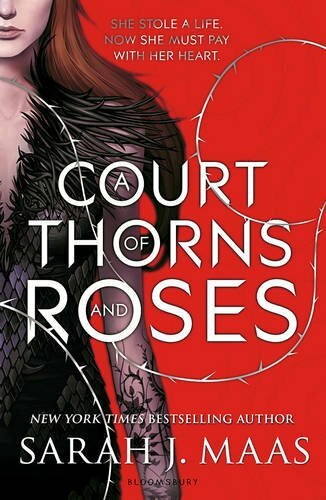
“A Court of Thorns and Roses”, is a captivating book about a nineteen year old girl, named Feyre. Feyre and her family are going through tough times, and food is hard to come by. They are on the verge of hunger and are rejected by upper class society. Feyre has taken it upon herself and is now responsible for doing the hunting to provide food for her family. One day she spots a doe to hunt, but to her astonishment, the doe is attacked by a huge wolf first. She wonders if he’s a Fae in wolf form, but she shoots him with an ash arrow nevertheless because she despises Fae. Soon, a large wolf faerie comes and demands retribution for the murdered wolf. Feyre agrees to pay with her life and live forever in Prythian, a land full of dangerous creatures.

I really loved this book! This book reminds me of “Beauty and the Beast”, but with a nice twist to it! Moreover, I love how this book is a pretty straightforward love-story. Most books I read, it’s almost always about a girl, and there are many guys she could possibly fall in love with. But not in this book! That’s why I enjoy reading it so much. The mystery in this book is also amazing! Since the beginning of the book, everyone starts talking about a mysterious “she”. At a certain point in the story, Feyre was swimming with Tamlin when she asked him who took Lucien’s eye? Tamlin hesitantly responds and says “she” took it out. There was another time when a fairy whose wings were ripped off screams in pain while saying, “she” took them off. Like, who is this mysterious “she” everyone is talking about? You’re just gonna have to keep reading to find out! Lastly, I love how there aren’t many plot twists in this story. At the beginning of the story, there are many questions you are going to keep asking yourself, and as you read on, you can start making guesses on who, or what is going to happen next.

Out of 5 stars, I would give this book a 4.8. I would highly recommend this book for ages 13 +, since there are some adult content in there that might not be appropriate for younger children.

A Court of Thorns and Roses by Sarah J. Maas is available to check out from the Mission Viejo Library. It is also available to download for free from Libby.

How to Write a Novel in four Months: Advice from a Teen Author

Writing a novel takes a lot of time; If you’re reading this, you may want to know how to write a book in four months. Well, I’m here to tell you that it is possible. I wrote my first novel in four months when I was thirteen. And, while it wasn’t the best novel ever written, it was a start. Here’s the thing: many people think that writing a book is a huge, daunting task that takes years. And, sure, some novels do take years to write. But, those novels usually result from years of planning, outlines, and drafts. You can do it if you want to write a novel in four months. All you need is a plan and a little bit of motivation. How do you write a book in two to four months? First, you need to sit down and make a plan. What is your novel about? The main plot? The subplots? Who are the main characters? What are their motivations? Once you have a plan, it’s time to start writing.

The first step is to set a goal for yourself. Write 200-500 words a day, or 1,000 words a day, or whatever you think you can handle. And then just write. Write without stopping, without editing, and without worrying about whether or not your writing is good. Just write. The first draft is always the hardest, but it’ll be more manageable once you get going. If you hit a wall, take a break. Go for a walk, watch a movie, or read a book. But don’t give up. Writing a novel is a lot of work, but it’s also a lot of fun. And, in the end, it’s always worth it.

Second, get started and keep going. You don’t need to have everything figured out before you start writing. In fact, it’s often better to start writing and see where the story takes you. You can always go back and make changes later. The most important thing is to keep writing. Keep going even if you hit a rough patch or think your writing could improve. Just keep going. The more you write, the better you’ll get at it. And if you finish your novel and are unsatisfied with it, that’s okay. You can always revise it or even start over. The important thing is that you finish it. Writing a novel is a huge accomplishment, no matter how long it takes or how it turns out.

Third, set a daily word count goal and stick to it. Set a daily word count goal and stick to it. This may seem daunting, but it is doable if you are disciplined and have a clear plan. Sit down and calculate how many words you need to write daily to reach your goal of 50,000 words in four months. This may seem like a lot, but only about 800-1000 words per day. Once you have your daily plan, make sure to stick to it. There will be days when you may feel like you need help to get stuck, but push through and remember your goal. If you stay caught up, don’t stress; catch up as soon as possible. Writing a novel is a lot of work, but it is also fun. So, set your goal and stick to it, and you will be well on your way to writing a great novel in just four short months.

Fourth, Don’t worry about being perfect; just keep writing.
Assuming you have a story outline and characters already planned out, the best way to write a novel in four months is to just keep writing. It can be easy to get bogged down in perfectionism, but it’s important to remind yourself that the first draft doesn’t have to be perfect. Just get the story down on paper (or screen), and worry about fixing it later. If you’re worried about making mistakes, just remember that everyone makes them. Even best-selling authors had to revise their work before it was published. The most important thing is to keep writing; you’ll be surprised how quickly the words start to flow.

Fifth, Make time for your story every day.
No matter how busy you are, if you want to write a novel in four months, you must make time for your story every day. That means setting aside at least an hour each day to write, and more if you can. Even if you can only spare 30 minutes, or 20, or 10, that’s still enough to get some words down on the page. The best way to make sure you stick to your writing schedule is to set a daily goal. Decide how many words you want to write, and then make sure you write at least that many. Some days you’ll write more, and some days you’ll write less, but as long as you hit your goal most days, you’ll make good progress. If you have trouble finding time to write, try getting up an hour earlier and writing before school or work. Or write during your lunch break. Or write in the evening after you’ve finished your homework. You can also break your writing sessions into smaller chunks and write for 10 or 15 minutes throughout the day. The most important thing is to be creative about how you fit writing into your life. There needs to be one right way to do it. Just make sure you find a way to make it work.

The next step is, Let your characters lead the way.
There’s no single right way to write a novel, but some methods are more effective than others. One method that can be particularly useful is to let your characters lead the way. What does this mean, exactly? It means that you should focus on your feelings first and foremost and let their actions and decisions drive the plot. This can be a great way to ensure that your story is character-driven rather than plot-driven. One of the best ways to do this is to brainstorm your characters before you start writing the story. Write down everything you know about them, including their backstories, goals, and personality traits. The more you know about your characters, the easier it will be to let them lead the way. Another helpful tip is to start each chapter with a character’s name. This will help you track who’s doing what and make it easier for your readers to follow. Finally, feel free to let your characters make mistakes. It’s their story, after all, and their mistakes will make them more relatable and human. Consider how your decisions have led to good and bad things in your life, and use that to inform your character’s choices. Remember, there’s no single right way to write a novel. So if you find yourself struggling, take a step back and see if letting your characters lead the practice might be the best course of action.

Finally, enjoy the process, and don’t get discouraged.
One of the best pieces of advice I can offer for anyone trying to write a novel in four months is to not get discouraged. The process can be daunting, but it’s important to remember that writing is a journey, not a destination. You will make mistakes along the way, but that’s okay! The important thing is to enjoy the process and to keep writing. There will be days when you feel like you can’t do it, but you must push through. Remember why you’re doing this in the first place. Whether it’s because you want to tell a story or you’re aiming to get published, keep your goal in mind. And don’t be afraid to ask for help when you need it. Many resources are available to help you, whether online forums, beta readers, or writing groups. The most important thing is to not give up. Writing a novel is a lot of work, but it’s also a lot of fun. So go forth and write your heart out! Get started today!

Bella H.

Album Review: Juju by Siouxsie and the Banshees

Out of all the English groups of the 1980s, very few are as fascinating to me as Siouxsie and the Banshees. Originally associated with London’s punk scene in the late-1970s, the band, led by frontwoman Siouxsie Sioux, became one of the leading post-punk bands of the era. They would release Juju, a gothic masterpiece, in 1981. Juju has to be their best album and a personal favorite of mine.

The album cover of Juju

Juju, like The Scream and Kaleidoscope, is a product of the English post-punk movement with its tracks featuring a prominent bass line. Unlike The Scream, the guitar in Juju isn’t nearly as abrasive (though it has its moments that’d put a smile on John McKay’s face) and unlike Kaleidoscope, synthesizers take the backseat in this album. My favorite song from the album has to be “Spellbound”.

“Spellbound” is a post-punk marvel. Featuring John McGeoch on guitar, this track is truly exhilarating. McGeoch’s electric and acoustic guitar playing really makes this track unique. The acoustic guitar in particular sounds extremely fresh, even after the 10,000th listen.

Juju definitely is one of the best gothic albums out there and a peak of the post-punk movement. Its influences on the band’s contemporaries cannot be understated. I’d rate it a 9/10. It’s great. Give it a go.

TV Show Review: The Disastrous Life of Saiki K.

The Disastrous Life of Saiki K. is a Japanese animated series that aired its first episode in 2016. The series is about Saiki, a high school student who possesses psychic abilities, but chooses to live a normal life while trying to hide his supernatural power from all the people around him, especially his friends and classmates. 

I really liked the animation style of this series and most especially its characters, which are very well-made. The voice actors did such great jobs, although there are certain parts wherein the dialogues are quite fast, which some people dislike, but in my opinion, it is still certainly understandable, and you would not get lost watching any episode. The series contains a lot of witty and funny jokes that did not fail to make me laugh. Whenever I watch an episode, I will always have a good laugh because each character is comedic and has their own way of being funny.

I think that The Disastrous Life of Saiki K. is an underrated anime series, thus I hope that a lot more people will discover the show so that it will get the recognition it deserves. If you have always been interested in animated shows and/or movies and you have not tried watching this, you should definitely start watching, and you will not regret it! While for those who have never tried watching animated shows, I encourage you to explore and give it a shot!

Subnautica: A Horror Game In Disguise?

The amazing game of Subnautica is marketed as an underwater survival/adventure game. However, there is another aspect within the game that is not listed: Horror. Horror is an essential component of making Subnautica what it is.

Now, Subnautica does not use jumpscares, or blood and guts like you would expect in any other horror game. Instead, Subnautica uses a few aspects that i will talk and elaborate on.

The first aspect i would like to talk about is the fear of the unknown. The game just dumps you straight into a alien planet you are unfamiliar with right from the beginning. Phychological research has proven that humans have a strong tendency to repel things that they are not familiar with, and sticks with the things they are. This unknown planet aspect causes the player to have thoughts about dangerous creatures they don’t know about that wants to kill them.

The second aspect would be progression. In the game, you have to visit specific points on the map in order to progress further into the game. When you go to the locations, you will already be overwhelmed by the fear of the unknown, but to add to that fear, the developers of the game decides to put the most dangerous creatures in the entire game patrolling the places that you are forced to go to in order to progress further into the story. This will give you a feeling that there is always something big and dangerous chasing you, no matter where you go.

The third aspect is thalassophobia. If you don’t know what that is, it is the intense fear of large, and deep oceans. This aspect kind of overlaps with the fear of the unknown, but it also has some characteristics of its own. For example, if you’re swimming in an ocean on Earth, you can say that there may be a few fishes underneath you, or maybe a few sharks (no biggie right?), but you can be pretty sure there WILL NOT be a giant 100 meter long leviathan swimming in the same waters as you. But on an alien planet? Who knows what will be in the water?

The fourth and last aspect i will elaborate on is ambeince and sound design. It is common knowledge that the deeper you go in the water, the less light there will be, and in Subnautica, you are required to go deeper in order to progress. Now imagine this: You are 900 meters below the surface, your oxygen is running low and you are trapped in an seemingly endless void of dark waters, trying to find your orientation and your submarine. You hear a roar in the distance. You look around, attempting to find the source or the roar, but only to find nothing but pitch blackness. Words cannot describe the amount of fear and panic you would be in. Adding to that scenario, a creepy soundtrack of ambience voices, and faint clicks starts playing. Subnautica has tons of different soundtracks, and theyu are unique to every biome, reflecting the amount of threat the biome posseses. For example, in a safer area, the music would be light, peaceful, and happy. But when ytou start to go into a more dangeorus area, the music wil change into a creepy, and mysterious white background noise.

Obviously, these four aspects i have listed are not the only ones. There are many more that are designed to play with your mind, and to bring fear into you. A beginner player may be absolutely overwhelmed by fear, and may be tempted to delete the game, or try to forget about the game (that’s what i almost did haha), but if you keep playing, you will soon learn to overcome and look past the fear. Once you do that, you will see the true beauties this mysterious planet has to offer.

-Torres H.

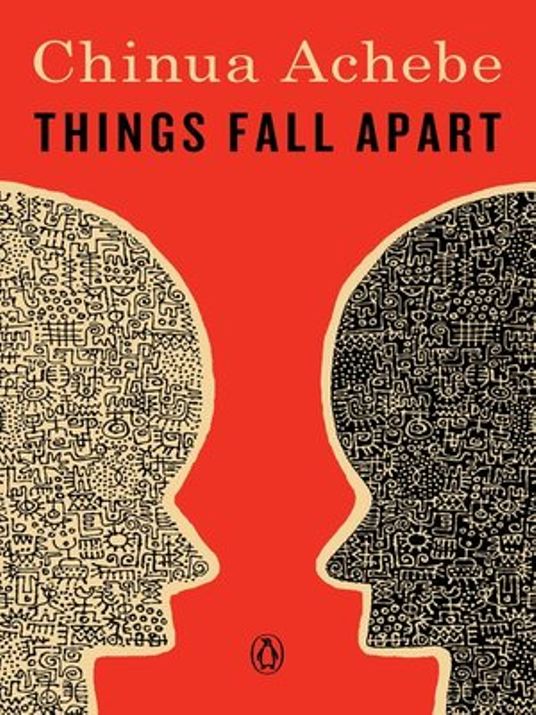
Book Review: Things Fall Apart by Chinua Achebe

Things Fall Apart by Chinua Achebe is a work of historical fiction. Achebe uses his Nigerian heritage and culture to give a view a dramatically different different view of Africa compared to the single sided narrative composed of stereotypes at the time.

This book was a very easy read, with about 200 pages. The book is broken up into three section and each chapter is very short and digestible. The best part about this book is Achebe’s ability to carry the reader into this completely different culture, showing them the laws, traditions, and religion of the Nigerian people post colonialism. This book is a true tragedy which follows not only the main characters story but those of an entire culture whose lives are flipped upside down with the arrival of the British.

I would recommend this book to anyone who is looking for a easy book that they could pick up in their spare time. I would also recommend this book to anyone who has any interest in African society and culture as it really does a great job of immersing the reader into African tribal culture. If you are into happy ending story this book might not be for you but it still is a well written and moving book you should give a try.

Things Fall Apart by Chinua Achebe is available to check out from the Mission Viejo Library. It is also available to download for free from Libby.